
01. Metallurgy & Physical Mechanics: Zamak 3 vs Cartridge Brass
When evaluating metal keychain fabrication, selecting the baseline substrate dictates virtually every downstream parameter: the level of permissible surface relief, structural tensile strength, electroplating adhesion, and overall unit weight. Overseas procurement teams frequently specify "brass" out of legacy habits, assuming it represents uncompromised luxury, without realizing that modern zinc alloys have revolutionized precision industrial manufacturing.
Physical Properties Comparison
- Zamak 3 Zinc Alloy (ASTM B240 / EN 1774): Composed of 95.8% zinc, 4% aluminum, and traces of magnesium. Density measures 6.7 g/cm³ with a low melting point of 385°C–390°C and tensile yield strength of 280 MPa. Its defining metallurgical superpower is exceptionally high fluidity when molten, allowing it to flash-fill steel mold channels as thin as 0.15mm and replicate high-definition 3D contours without material fatigue.
- Cartridge Brass H62/H65 (ASTM B36 / C26000): Composed of 62–65% copper and 35–38% zinc. Density measures 8.5 g/cm³ with a melting point exceeding 930°C and tensile strength of 340–390 MPa. Brass is ductile yet extremely rigid under compression. Because it is shaped through cold mechanical impact rather than melting, it resists volumetric deformation.
02. Manufacturing Workflows: High-Pressure Casting vs Progressive Stamping
Understanding how each material is worked in the factory explains why certain artwork styles thrive in one medium while failing in the other.
Process A: Hot-Chamber High-Pressure Die Casting (Zinc Alloy)
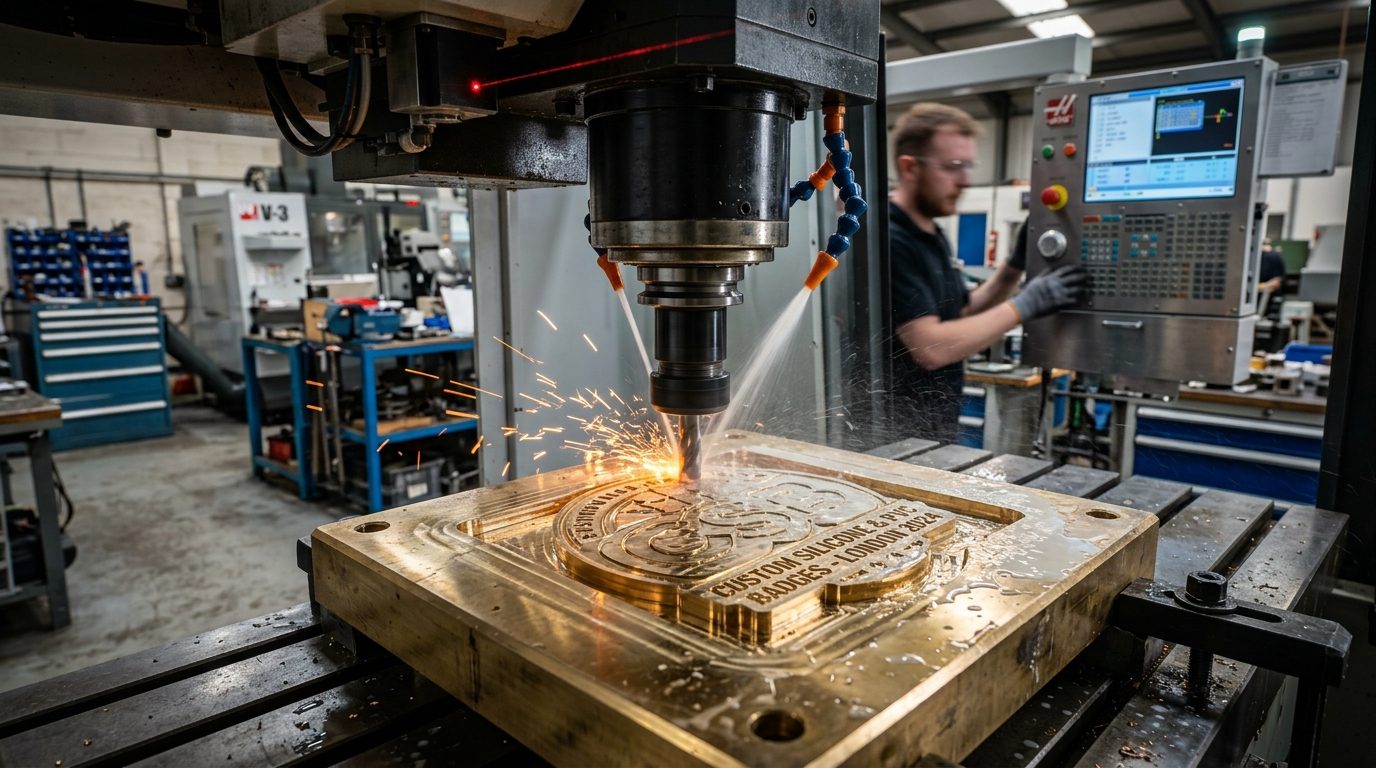
- Steel Tooling CNC Milling: High-grade H13 hardened tool steel (HRC 48–52) is milled on 5-axis CNC machines to cut precise negative cavities for both the front and reverse sides.
- Injection & Thermal Solidification: Zamak 3 ingots are liquefied in the machine furnace. A hydraulic plunger injects the liquid alloy at 25–35 MPa pressure into the clamped steel mold. Cycle time is rapid: 6 to 10 seconds per shot.
- Automatic Ejection & Trim Die: Parts are ejected with integrated gating. A secondary hydraulic trim die instantly shears off sprues and flash lines.
- Centrifugal Vibratory Deburring: Raw castings undergo 4 hours of high-frequency ceramic media tumbling to remove microscopic burrs and radius sharp edges.
- Manual Mirror Buffing: Highly trained polishers buff every surface against soft cotton wheels coated with tripoli compound to achieve an optical mirror finish prior to plating.
Process B: Cold Mechanical Stamping (Brass)
- Engraving High-Relief Steel Dies: Tungsten-carbide or SKD11 tool steel dies are engraved. Separate male and female punch dies are hardened up to HRC 58–62.
- Coil Slitting & Hydraulic Punching: Brass strip stock of uniform thickness (typically 2.0mm to 3.0mm) is fed into heavy hydraulic stamping presses ranging from 120 to 300 tons. The raw metal is forced into the die under extreme cold pressure.
- Annealing (Intermediate Heat Treatment): Because brass work-hardens under compression, multi-level relief designs require intermediate annealing at 600°C in an atmospheric furnace to prevent cracking before a second or third stamping pass.
- Blanking & Edge Trimming: A shearing perimeter tool cuts the badge out of the sheet ribbon.
- Edge Filing & Lapping: Hand workers file perimeter sheer burrs and lap the flat surfaces before rack preparation.
03. Comprehensive Technical Matrix & Tiered Unit Cost Breakdown
To assist procurement departments and cost-accounting specialists, the following empirical matrix compares every vital production and financial metric across both manufacturing routes:
| Evaluation Parameter | Die-Cast Zinc Alloy (Zamak 3) | Cold-Stamped Brass (H65) | Procurement Advantage |
|---|---|---|---|
| 3D Curvature & Relief Depth | Full 3D, unlimited curvature, depth up to 8.0mm | Flat 2D or stepped 2.5D, max depth 1.2mm | Zinc Alloy (Unmatched Sculptural Freedom) |
| Micro-Line Precision | Lines down to 0.12mm; recessed text to 0.15mm | Lines down to 0.20mm (risk of flattening) | Zinc Alloy (Higher Detail Fidelity) |
| Hollow Cutouts / Piercings | Formed directly in mold without secondary tooling | Requires separate expensive blanking punch | Zinc Alloy (Zero Added Tooling Fee) |
| Average Tooling Cost (50mm size) | $160 – $240 (H13 Steel Die) | $240 – $380 (SKD11 Dual Punch) | Zinc Alloy (30%–40% Cheaper Mold) |
| Mold Durability & Life | 100,000 to 250,000 cycles | 30,000 to 50,000 impacts (die wear) | Zinc Alloy (Longer Production Lifespan) |
| Unit Cost (500 pcs) | $1.45 – $1.85 / pc | $2.10 – $2.65 / pc | Zinc Alloy (Save ~32% per unit) |
| Unit Cost (2,000 pcs) | $0.92 – $1.25 / pc | $1.48 – $1.90 / pc | Zinc Alloy (Save ~38% per unit) |
| Unit Cost (10,000 pcs) | $0.65 – $0.88 / pc | $1.15 – $1.45 / pc | Zinc Alloy (Save ~42% per unit) |
| Material Density (Tactile Feel) | 6.7 g/cm³ (Substantial, weighted luxury) | 8.5 g/cm³ (Very heavy heirloom density) | Brass (Heavier, but increases freight) |
| Salt-Spray Corrosion (ASTM B117) | 48–72 Hours with Tri-Layer Plating + Lacquer | 48–72 Hours (Natural brass oxidation prone) | Equal with correct surface passivation |
| Sampling Lead Time | 5 – 7 Business Days | 7 – 9 Business Days | Zinc Alloy (Faster prototype turnaround) |
04. 3 Critical Pitfalls in Metal Merchandise Sourcing
Over the past 14 years of exporting hundreds of millions of custom items to the United States, Germany, the UK, and Japan, our factory has audited numerous competitor defects that led to brand product recalls. Here are the three most catastrophic traps to avoid:
1. The "Cheap Scrap Alloy" Contamination (Zinc Pest)
Low-tier workshops frequently blend recycled zinc scraps or contaminated lead-bearing alloys to reduce raw material procurement costs by 15%. This introduces impurities (specifically lead, cadmium, and tin) that trigger intergranular corrosion over 6 to 18 months, leading to bubbling electroplating, surface peeling, and brittle structural collapse. At Naike Gifts, we exclusively melt virgin certified Zamak 3 ingots with certified spectrographic testing reports verifying lead and cadmium below 50 ppm, complying strictly with European REACH and California Proposition 65.
2. Single-Layer Flash Plating vs. Tri-Layer Passivated Plating
A gold or silver keychain can look identical on day one regardless of electroplating quality. However, cheap "flash plating" applies a single microscopic decorative layer (under 0.01μm) directly onto zinc. Within 3 weeks of jingling against house keys or coming into contact with acidic hand oils, the finish wears off, revealing dull gray base metal. Premium B2B manufacturing mandates an alkaline copper base strike, followed by pyrophosphate acid copper leveling, bright nickel barrier, and precious metal deposition sealed with baked electrophoretic lacquer.
3. Weak Jump-Ring & Attachment Loop Design
The most common mechanical failure point is the integrated loop that connects the custom cast pendant to the metal keyring. If the loop wall thickness is designed below 1.5mm, daily pocket leverage will snap it off. Our engineering team automatically checks CAD drawings during initial DFM (Design for Manufacturability) review to ensure minimum 2.0mm loop wall cross-section and 45° internal fillets that withstand at least 80 Newtons of direct mechanical pull force.
05. Electroplating Chemistry & ASTM B117 Salt-Spray Durability
For corporate gifts and retail accessories, electroplating longevity is non-negotiable. Naike Gifts operates a multi-tank robotic rack electroplating line equipped with continuous filtration and precise digital current density regulation.
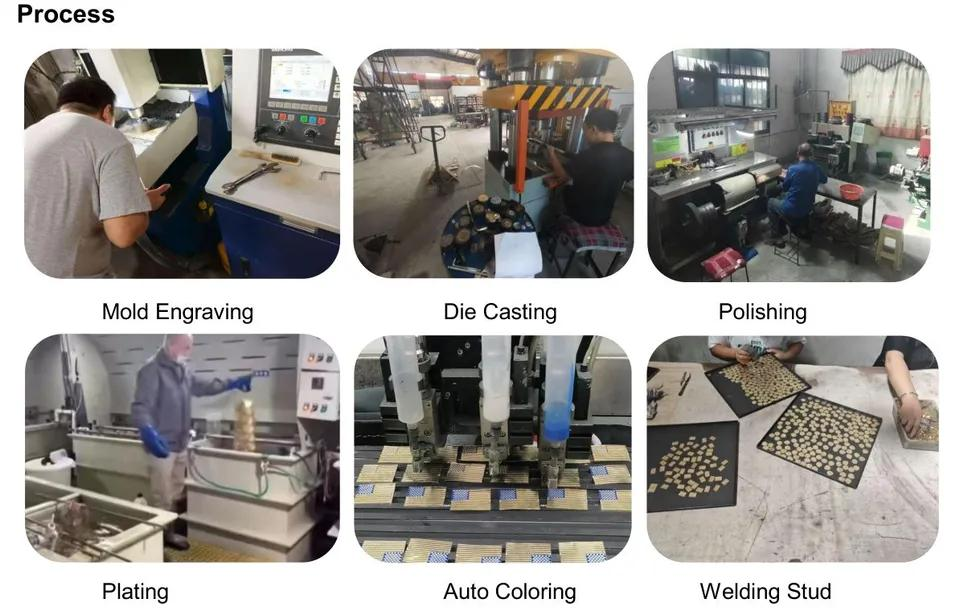
Our 5-Stage Plating Architecture for Zinc Alloy:
- Cyanide-Free Alkaline Copper Strike (2–3 μm): Forms an atomic-level metallurgical bond with the zinc substrate, neutralizing surface porosity.
- High-Build Acid Copper Leveling (8–10 μm): Fills micro-cavities and provides an ultra-smooth, mirror-like optical foundation.
- Bright Nickel Diffusion Barrier (10–12 μm): Prevents copper migration and delivers primary anti-corrosion protection and surface hardness.
- Target Precious Metal Finish (0.03–0.08 μm): Deposition of genuine 18K/24K Gold, High-Gloss Chrome, Rose Gold, Antique Bronze, or Gunmetal Black.
- Thermal-Cured Electrophoretic Lacquer (5–8 μm): Complete immersion in transparent polyurethane resin baked at 160°C for 30 minutes, producing an impervious ceramic-grade barrier against atmospheric oxidation and scratch abrasion.
Salt-Spray Validation: We subject random production samples from every 5,000-piece batch to ASTM B117 continuous neutral salt-spray chamber testing (5% NaCl solution at 35°C). While standard industry items fail at 12–24 hours, our sealed passivated keychains withstand 72 continuous hours with zero blistering, pitting, or red rust corrosion.
06. Shopfloor Case: European Auto Club 12,000 Pcs 3D Sculpture Keyring
Project Dossier & Engineering Solution
Client: Continental European Luxury Performance Automotive Owners Club
Initial Request: 12,000 custom keyrings shaped like a miniature 3D turbocharger turbine housing with polished chrome finish and recessed sapphire blue enamel inlay.
Engineering Challenge: The customer initially solicited quotes for stamped brass, but prototype tooling from another supplier resulted in severe metal tearing on the 3D turbine impellers and exorbitant mold quotes ($680 across dual dies).
Naike Gifts Intervention: Our engineering team converted the CAD model to Zamak 3 die-cast tooling featuring an internal slider mechanism. Tooling cost was reduced to $260. We implemented mirror vibratory polish and heavy bright chrome rack plating with 72-hour salt-spray certification. The final unit price dropped from €2.35 to €1.18, delivering €14,040 in budget savings with 100% first-pass inspection approval.
07. Factory AQL 1.0/2.5 Quality Inspection Protocol
Every custom production batch at Naike Gifts undergoes comprehensive quality control before export boxing:
- Dimensional Verification: Digital calipers and optical micrometers verify critical length, width, thickness (±0.05mm), and attachment hole diameters.
- Cross-Hatch Adhesion Test (ASTM D3359): A multi-blade cutter scribes a 1mm grid into the plated surface, pressure-sensitive 3M tape is applied and vigorously pulled at 180°. 100% adherence (Class 5B) required.
- Drop & Impact Resistance: Finished keychains are dropped from 1.5 meters onto a reinforced concrete floor 5 times to confirm no zinc breakage or enamel chipping.
- Keyring Pull Strength: Calibrated digital tension meters test the assembled split-ring, jump-ring, and swivel joint to withstand minimum 80N sustained pull force.
Ready to Engineer Your Custom Metal Keychain?
Send us your logo, 2D vector file, or 3D concept. Our Jinjiang factory engineering team will provide a comprehensive DFM feasibility review, 3D proof rendering, and transparent direct factory quote within 12 hours.