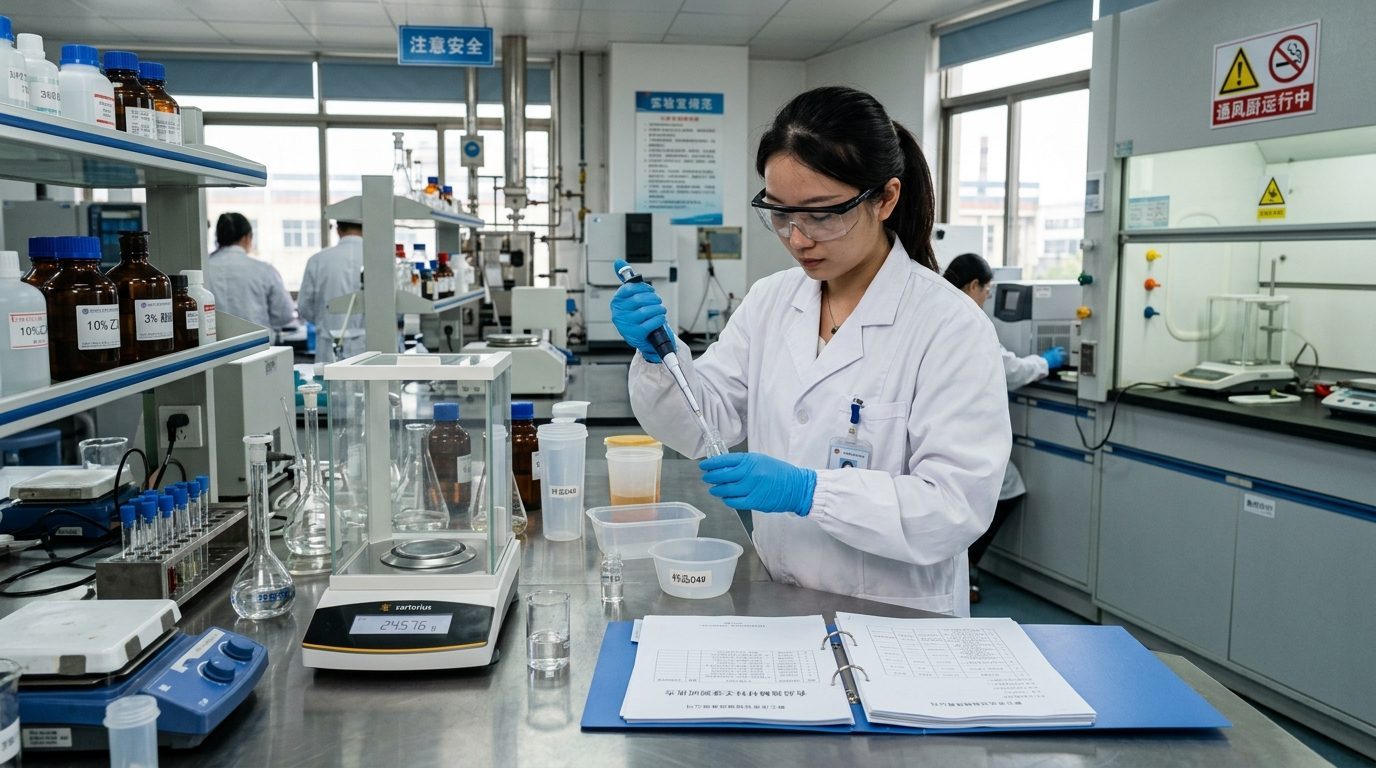
Figure 1.0: Migration simulant extraction and heavy-metal testing in our calibrated food-contact compliance analytical facility.
When sourcing custom plastic drinkware or food containers from China, food-contact compliance must be validated per finished component (body, lid, silicone gasket, straw):
- United States (FDA 21 CFR): Requires components to satisfy specific resin monographs (e.g., 21 CFR 177.1520 for PP, 21 CFR 177.1240 for copolyester). Testing measures chloroform-soluble extractives and total extractives. Products must also satisfy California Prop 65 heavy metal limits.
- European Union (EC No 1935/2004 & EU No 10/2011): Mandates an Overall Migration Limit (OML) of ≤ 10 mg/dm² (or ≤ 60 mg/kg food simulant) tested under harsh food simulants (3% Acetic Acid, 50% Ethanol, Tenax).
- Germany (LFGB §§ 30 & 31): The gold standard in food safety. Beyond EU 10/2011, LFGB requires stringent sensory testing (DIN 10955 grade ≥ 2.5) to ensure boiling hot liquids absorb zero chemical odor or aftertaste.
One of the most dangerous misconceptions among international buyers is asking: "Is your factory FDA certified?" The FDA does not certify plastic drinkware facilities. Instead, compliance is strictly verified through accredited lab test reports per specific resin formula, finished article geometry, and intended conditions of use.
Global Regulatory Comparison Matrix
This table outlines the differences in chemical extractives, migration thresholds, and required documentation across major importing territories:
| Jurisdiction | Governing Regulation | Primary Test Scope | Key Limits & Thresholds | Mandatory Documentation |
|---|---|---|---|---|
| United States | FDA 21 CFR Parts 170–189 / Prop 65 | Raw resin composition, hexane/water extractive residues, lead & cadmium extraction | Chloroform soluble extractives < 0.5 mg/in²; Lead < 100 ppm | SGS / Intertek Test Report, Resin COA |
| European Union | Regulation (EC) No 1935/2004 & (EU) No 10/2011 | Overall migration, specific migration of heavy metals (SML), primary aromatic amines (PAA) | OML ≤ 10 mg/dm²; Specific limits on 24 heavy metals | Declaration of Conformity (DoC), Lab Test Report |
| Germany | LFGB (Food, Commodities & Feed Code) §§ 30, 31 | EU 10/2011 criteria plus comprehensive sensory testing for odor and taste transfer | Sensory Grade ≥ 2.5 (no organoleptic alteration to water/tea) | Accredited LFGB Test Certificate with sensory sign-off |
| California (USA) | Proposition 65 Safe Drinking Water Act | Leachable lead, cadmium, phthalates (DEHP, DBP, BBP, DINP, DIDP, DNHP) | Total lead ≤ 100 ppm; Phthalates each ≤ 1,000 ppm (0.1%) | Substance screening report or Prop 65 warning exemption pass |
The 3 Critical Lab Tests Every Buyer Must Examine
1. Overall Migration Limit (OML) Testing
Testing simulates prolonged contact between drinkware and various beverage types using certified food simulants:
- Simulant A (10% Ethanol): Simulates clear water, beer, and cold beverages.
- Simulant B (3% Acetic Acid): Simulates acidic fruit juices, sodas, and sports drinks.
- Simulant D1 (50% Ethanol): Simulates alcoholic beverages and dairy coffee emulsions.
Test specimens are submerged under standardized temperature cycles (e.g., 2 hours at 70°C or 10 days at 40°C). Any weight change in the simulant exceeding 10 mg/dm² results in customs rejection.
2. Specific Migration Limits (SML) for Heavy Metals & Plasticizers
Modern mass spectrometry (ICP-MS) tests for the leaching of heavy metals including Aluminum, Barium, Cobalt, Copper, Iron, Lithium, Manganese, Nickel, and Zinc. At Naike Gifts, our polymers use 100% virgin prime resins with heavy metal concentrations undetectable below 0.01 mg/kg.
3. Sensory Organoleptic Evaluation (LFGB Mandatory)
Trained sensory panels evaluate distilled water stored inside the cup at 70°C for 2 hours. If the beverage absorbs a plastic or chemical odor/taste, the product fails LFGB certification even if chemical migration is zero.
Deep-Dive: US FDA 21 CFR 177.1520 & 21 CFR 177.1640 Extraction Protocols
For brands importing into the United States, FDA food contact compliance is governed by strict codified federal regulations under Title 21 of the Code of Federal Regulations. The test parameters differ substantially based on polymer classification:
| Polymer Type | FDA Regulation Clause | Test Solvent & Exposure Conditions | Maximum Permissible Extraction Limit |
|---|---|---|---|
| Polypropylene (PP) | 21 CFR 177.1520(c)(1.1) | n-Hexane extraction at reflux temperature (50°C) for 2 hours; Xylene extraction at 25°C for 2 hours. | Max 6.4% w/w n-Hexane extractable fraction; Max 9.8% w/w Xylene soluble fraction. |
| Styrene Polymers (AS / SAN) | 21 CFR 177.1640 | Total residual styrene monomer analysis via gas chromatography (GC-FID). | Residual styrene monomer ≤ 0.5% (5,000 ppm) for general food contact; ≤ 0.1% for fatty food contact. |
| Copolyester (Tritan) | FCN (Food Contact Notification) No. 1041 | Distilled water (100°C, 2h), 3% Acetic Acid (100°C, 2h), 8% Alcohol (reflux, 2h), and n-Heptane (49°C, 2h). | Total chloroform-soluble extractives ≤ 0.05 mg/inch² across all solvent extractants. |
| Silicone Seals & Gaskets | 21 CFR 177.2600 (Rubber Articles) | Distilled water at reflux (7h then 2h); n-Hexane at reflux (7h then 2h). | Water extractives: ≤ 20 mg/in² (first 7h), ≤ 1 mg/in² (next 2h); Hexane: ≤ 175 mg/in² (7h), ≤ 4 mg/in² (2h). |
European Food Simulants Protocol under Regulation (EU) No 10/2011
Under European Union harmonized legislation, food contact plastics must be tested against specific food simulants assigned according to the intended dietary contact nature:
Standardized Simulants & Exposure Matrix for Drinkware:
- Simulant A (10% Ethanol v/v): Simulates clear aqueous foods and mild alcoholic drinks (<10% ABV). Standard exposure: 2 hours at 70°C (hot fill) or 10 days at 40°C (long-term room storage).
- Simulant B (3% Acetic Acid w/v): Mandatory for all fruit juices, carbonated soft drinks, lemonade, and acidic dressings (pH < 4.5). Tests overall migration and heavy metal leaching (Lead ≤0.01 mg/kg, Cadmium ≤0.002 mg/kg, Cobalt ≤0.05 mg/kg).
- Simulant C (20% Ethanol v/v) & D1 (50% Ethanol v/v): Required for spirits, liqueur, high-alcohol beverages, and milk/dairy-based smoothies.
- Simulant D2 (Rectified Olive Oil or Iso-octane substitute): Compulsory for fatty foods, butter, chocolate spreads, or oily snacks in custom combo containers.
Case Study: Overcoming Azo Dye & Heavy Metal Leaching in Custom Color Matching
Incident Analysis: A German housewares buyer customized a vivid Pantone 185C bright red PP lunch box container at another supplier. During mandatory LFGB import clearance testing at TÜV Rheinland Hamburg, the shipment was rejected due to Primary Aromatic Amines (PAA) detection exceeding the strict 0.01 mg/kg limit and sensory odor score failing at 3.5 (LFGB limit ≤ 2.5).
Engineering Root Cause: The supplier used low-cost industrial-grade red organic azo pigments containing aromatic amine precursors, combined with non-degassed recycled carrier resin.
Naike Gifts Preventive Engineering Protocol:
- Certified Food-Contact Masterbatches: We mandate 100% Clariant/Ampacet medical/food-grade color masterbatches verified under European Resolution AP(89)1 and FDA 21 CFR 178.3297.
- Secondary Post-Curing Desorption: High-temperature vacuum baking (110°C for 3 hours) is conducted on all colored components to drive out residual volatile organic compounds (VOCs) and moisture before packaging.
- Batch Traceability Certificate: Every masterbatch delivery is accompanied by an unbroken Certificate of Analysis (CoA) demonstrating negative migration of 24 listed carcinogenic aromatic amines.
Result: The re-formulated production batch passed LFGB testing at SGS Shanghai with non-detectable PAA (<0.002 mg/kg) and an organoleptic sensory score of 1.0 (neutral), clearing German customs without delay.
Customs & Retail Audit Pre-Shipment Checklist
- Report Age: Ensure test reports are issued within the past 12 months by an ISO 17025 accredited laboratory (SGS, Intertek, TÜV Rheinland).
- Item Identification: Confirm the exact product SKU number, photo, and material description matches your purchase order.
- Multi-Component Testing: If the cup features a silicone straw and TPE grip, verify that the silicone and TPE were individually tested alongside the plastic body.
- Declaration of Conformity (DoC): Keep a signed manufacturer DoC stating compliance with (EC) No 1935/2004 for immediate customs presentation.
Food Contact Compliance Misconceptions Debunked
❌ Myth 1: "US FDA 21 CFR Approval is Automatically Accepted Across the European Union"
✔ Engineering Reality: False. US FDA regulations focus on raw material composition and broad extraction limits. In contrast, European (EC) No 1935/2004 and German LFGB §30/31 require strict organoleptic sensory testing (DIN 10955 taste and odor transfer) and tighter specific migration limits (SML) for volatile organic compounds and peroxide residues.
❌ Myth 2: "A Raw Resin Supplier's Test Certificate Covers the Finished Molded Product"
✔ Engineering Reality: Customs authorities and retail auditors (Walmart, Target, Carrefour) reject raw pellet test reports. Injection barrel shear heat, masterbatch colorants, and mold release agents can cause polymer chain degradation. Testing must be conducted on the final finished SKU in its commercial packaging.
❌ Myth 3: "BPA-Free is the Only Chemical Test Required for Drinkware"
✔ Engineering Reality: Modern regulatory compliance under EU GPSR and California Prop 65 mandates screening for Bisphenol S (BPS), Bisphenol F (BPF), primary aromatic amines (PAA), heavy metals (lead, cadmium), and orthophthalate plasticizers.
Need Specific Compliance Test Reports for Your Import Port?
We provide full, verifiable SGS / TÜV test reports and Declarations of Conformity covering our entire catalog.
Frequently Asked Questions on Food-Contact Compliance
Can I use a single test report for multiple colors of the same cup?
Generally yes, provided the base polymer resin is identical and colors are compounded from verified food-grade masterbatches. However, for LFGB compliance, German auditors frequently require migration testing on the darkest pigment color (e.g., black or dark blue) to represent the worst-case scenario.
Are recycled plastics (RPET / PCR) approved for food contact?
Yes, but recycled resins must possess a formal FDA Letter of No Objection (LNO) or European EFSA positive scientific opinion certifying that the recycling decontamination process removes all chemical contaminants.
How does Naike Gifts prevent batch-to-batch contamination?
We operate closed-loop central drying and pneumatic feeding systems. Our factory never uses regrind floor waste in food-contact chambers, and every resin lot is inspected with IQC melt flow index (MFI) and density screening.