
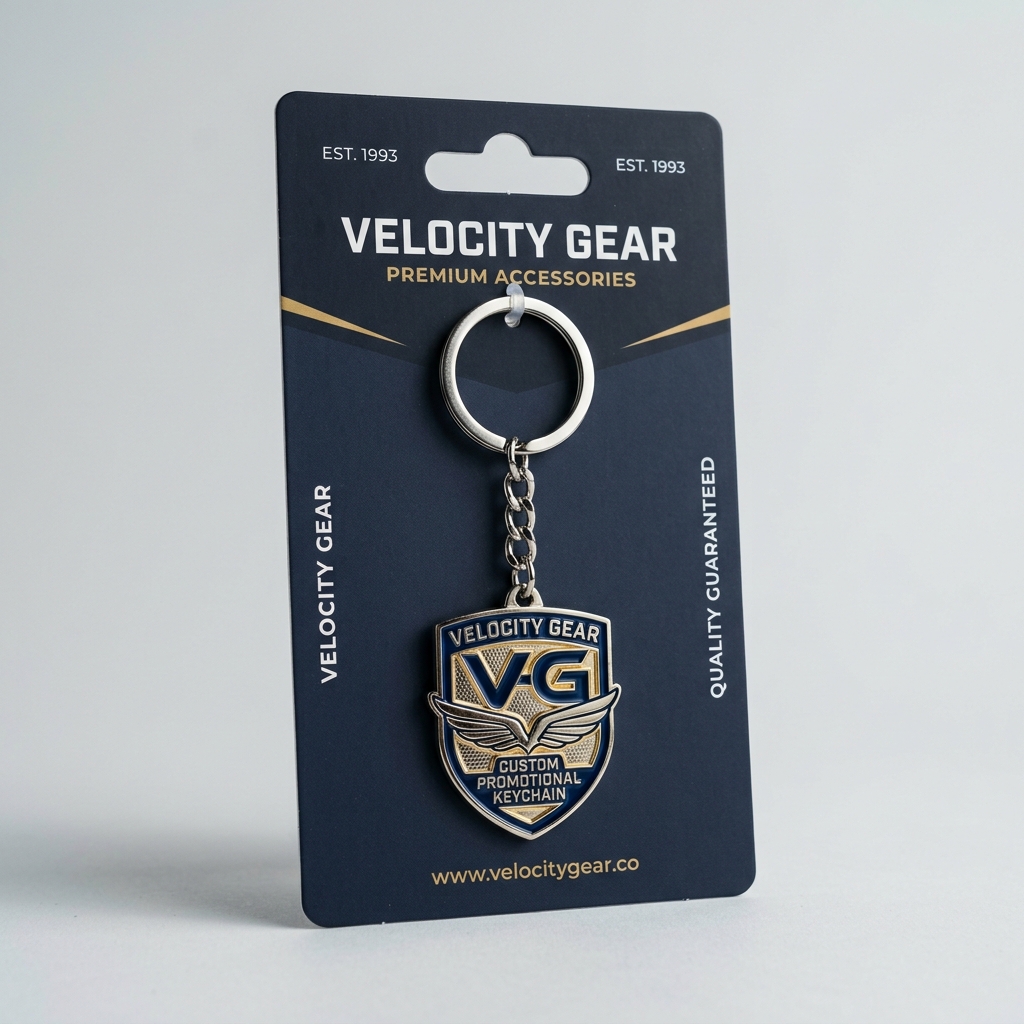
01. Why Keychain Hardware Can Make or Break Your Merch Campaign
When developing custom promotional keychains—whether crafted from die-cast zinc alloy, soft PVC, or laser-cut acrylic—most brand managers spend 95% of their attention on the front charm. However, from a consumer satisfaction and brand longevity standpoint, the attachment hardware is the primary single point of mechanical failure.
A broken jump ring causes the customer to lose their keys or drop their branded charm on the pavement. A substandard nickel plating oxidizes after two weeks in a humid pocket, turning greenish-black and eroding brand perception. At our 1,650㎡ Jinjiang manufacturing facility, we engineer keychain attachments with the same rigor as the charm itself, treating connectors as structural components.
02. Core Attachment Types: Engineering Pros, Cons & Best Fits
Below is our comprehensive engineering comparison of the five primary attachment mechanisms utilized across retail, corporate swag, and high-frequency EDC (Everyday Carry) keychains:
| Hardware Type | Tensile Rating | Material Composition | Ideal Application | Relative Cost |
|---|---|---|---|---|
| Flat Split Ring (25/30mm) | >15 kgf (147 N) | Tempered Spring Steel / Brass | Standard corporate keyrings, mailers | Baseline ($) |
| Jump Ring + 4-Link Chain | 8 – 12 kgf | Welded Mild Steel / Iron | Acrylic charms, festival giveaways | + $0.04 / pc |
| Lobster Swivel Snap Hook | >18 kgf (176 N) | Die-cast Zinc Alloy + Steel Spring | Backpack charms, streetwear retail drops | + $0.12 / pc |
| Spring-Gate Carabiner | >22 kgf (215 N) | Anodized Aluminum / Zinc Alloy | Outdoor lifestyle, sports clubs, EDC gear | + $0.18 / pc |
| Twist-Lock Stainless Cable | >25 kgf (245 N) | Braided SUS304 Stainless Steel | Industrial ID tags, heavy vehicle keys | + $0.15 / pc |
1. Flat Split Rings vs Round Wire Rings
Traditional wire rings are made by coiling round wire. While economical, they have a tendency to permanently deform when threading thick car keys. In contrast, Flat Split Rings are stamp-flattened under high tonnage, creating high lateral stiffness and superior memory recovery. They stay tightly closed, preventing thin split rings or tags from slipping out.
2. Swivel Mechanisms (360° Rotational Freedom)
When charms are attached to keyrings that undergo constant pocket movement, rigid connectors experience cyclic torsional fatigue. Integrating a 360° swivel eyelet allows the pendant to rotate independently from the keys, reducing stress on the connecting loop and preventing chain tangling.
03. Mechanical Pull Strength: Testing Beyond the 15kgf Benchmark
In accordance with our factory quality standard, all finished custom keychains undergo destructive mechanical tensile testing using a digital force gauge:
For children's merchandise or items subject to US Consumer Product Safety Commission (CPSC) regulations, loose attachments pose choking risks (16 CFR 1501 small parts test). Ensuring welded jump rings or solid one-piece cast loops eliminates the risk of accidental separation.
04. Metal Plating & Anti-Corrosion (ASTM B117 Compliance)
Hardware appearance is determined by the electroplating stack. Low-end suppliers use flash plating directly over raw steel. Over time, atmospheric moisture and hand sweat cause microscopic galvanic reactions, stripping the plating in weeks.
- Copper Pre-Plate (Barrier Layer): A 3μm acid copper layer fills micro-porosities in base metals, leveling the surface.
- Nickel Barrier Layer: Provides hardness and acts as a reflective foundation. For European exports, we formulate strictly Nickel-Free compliant chemistries (EN 1811:2011 nickel release standard).
- Topcoat Precious/Decorative Plating: Real imitation gold, chrome, gunmetal, antique brass, or black electrophoretic coating.
- Clear Electro-Phoretic Sealant: A baked acrylic transparent sealer protecting against friction wear and sweat acidity.
Our standard hardware batches undergo 48-hour ASTM B117 Neutral Salt Spray Testing (NSS), guaranteeing zero pitting, blister formation, or rust spots under normal consumer usage.
05. Cost & MOQ Breakdown for B2B Custom Assemblies
Selecting the appropriate hardware allows procurement teams to balance unit pricing and perceived value:
- Promotional Tier ($0.25 – $0.40 total unit cost): 25mm Flat Split Ring + 4-link curb chain. Low MOQ of 100 pcs. Free 3D proof in 2 hours.
- Retail & Boutique Tier ($0.55 – $0.95 total unit cost): Custom die-cast swivel lobster clasp, debossed logo on split ring, individual retail backing card.
- Executive & Automotive Tier ($1.10 – $2.50 total unit cost): Genuine leatherette loop, brushed antique brass carabiner, packed in rigid gift boxes.
Need Custom Hardware Recommendations for Your Next Production?
Send us your vector logo and target budget. Our engineering team provides a complete 3D digital proof pairing your charm design with the optimal hardware assembly within 2 hours.