
01. Core Differences: Flat Polish vs. Recessed Relief
When foreign trade distributors and brand procurement officers ask for custom metal keychains, the first fork in the road is deciding between Hard Enamel (Imitation Cloisonné) and Soft Enamel. While both utilize a stamped brass or die-cast zinc alloy metal substrate, their physical tactile finish and manufacturing labor intensity differ substantially.
Hard Enamel: Liquid synthetic pigment paste is injected into recessed metal cavities, baked at elevated temperatures (approx. 160°C–200°C), and then individually stone-ground down until the colored enamel is perfectly level with the surrounding metal outlines. The final surface is mirror-flat, scratch-resistant, and conveys executive luxury.
Soft Enamel: The metal badge is stamped, polished, and electroplated first. Then, enamel pigment is dispensed into the recessed wells and air-cured or low-baked. The colored areas sit noticeably below the metal borders, producing a three-dimensional, textured touch that catches light across relief ridges.
02. Step-by-Step Production Process
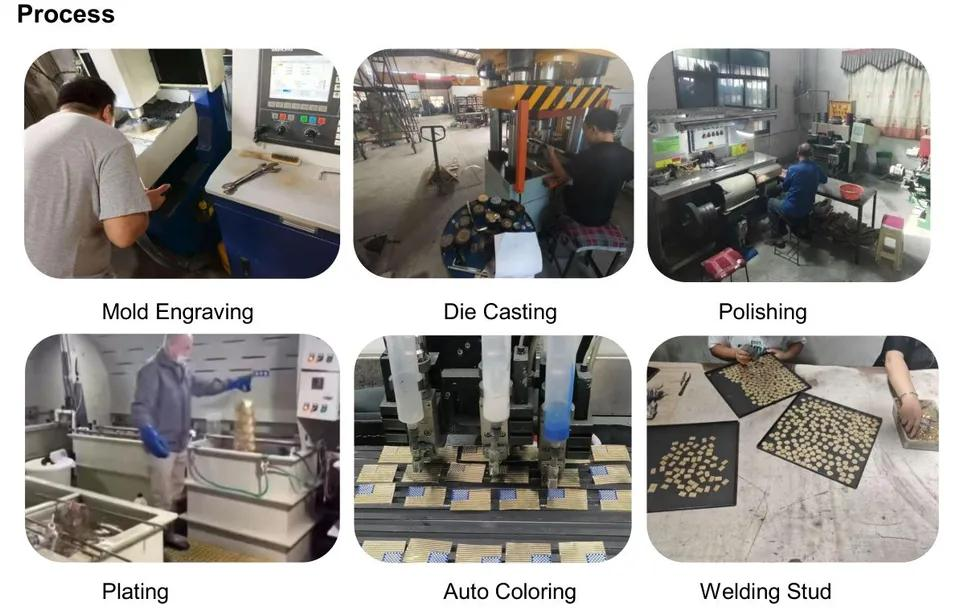
Inside our 1,650㎡ Jinjiang manufacturing facility, both processes follow strict ISO 9001:2015 workflows with distinct divergence in the plating and finishing sequences:
Hard Enamel Sequence (Plated AFTER Stone Polishing):
CNC Steel Mold → LK Die-Casting / Stamping → First Enamel Dispensing → High-Temp Baking → Rotary Stone Flat Grinding → Secondary Fine Polishing → Rack Electroplating in Eco Park → Hardware Riveting & 100% QC.
Soft Enamel Sequence (Plated BEFORE Enamel Fill):
CNC Mold → Die-Casting / Stamping → Surface Deburring & Polishing → Industrial Electroplating → Multi-Head Automated Color Dispensing → Baking Chamber → Optional Epoxy Dome → Keyring Assembly.
03. Technical Specifications & Cost Comparison Table
The table below summarizes commercial metrics for typical 1,000–5,000 piece production runs:
| Feature / Metric | Hard Enamel (Imitation Cloisonné) | Soft Enamel (Recessed Relief) |
|---|---|---|
| Surface Feel | 100% Flush, Mirror-Smooth Flat | 3D Textured with Recessed Wells |
| Scratch Resistance | Extreme (Resists keys, coins, friction) | Moderate (Can add protective epoxy resin) |
| Color Fill Tolerance | 0.18mm fine line boundary | 0.20mm boundary wall height required |
| Plating Finishes | Bright Gold, Nickel, Black Nickel | Gold, Silver, Antique Bronze, Rainbow, Matte |
| Relative Unit Cost | 15%–25% higher (intensive grinding labor) | Cost-effective baseline (fast automated fill) |
| Best Application | Luxury automotive, corporate anniversaries | Mass giveaways, streetwear merch, comic conventions |
| Sample Lead Time | 4–6 business days | 3–4 business days |
04. 3 Critical Buyer Misconceptions
⚠️ Misconception 1: 'Soft enamel is literally soft to the touch like rubber.'
False. Both use solid metal bodies (zinc alloy or brass). 'Soft' merely refers to the low-bake liquid enamel that stays recessed below the metal border, not rubber flexibility.
⚠️ Misconception 2: 'Hard enamel allows any plating finish including antique patina.'
Partially false. Because hard enamel is stone-ground flush, antique finishes requiring deep recesses for oxidation washes do not adhere well to the flat surface. Soft enamel is vastly superior for vintage antique brass finishes.
⚠️ Misconception 3: 'Adding epoxy to soft enamel makes it hard enamel.'
Incorrect. An epoxy dome creates a smooth clear resin bubble over soft enamel, but it can yellow over 2–3 years under UV light. True hard enamel contains zero epoxy and will never discolor.
05. Shopfloor Case: Nordic Marine Logistics: 15,000 Pcs Employee Milestone Keychain Order
A Scandinavian logistics conglomerate required custom anniversary keyrings for vessel crew members operating in marine environments. We recommended Zinc Alloy Hard Enamel with double-layer chrome plating over soft enamel. Stone grinding ensured no salt crystals could accumulate in recessed wells, and 48-hour neutral salt-spray chamber testing certified zero tarnish under ocean spray conditions. The order was delivered DDP within 14 business days from our Jinjiang workshop.
06. B2B Procurement & Quality Inspection Checklist
- ✅ Verify vector artwork has minimum 0.18mm metal line separation between adjacent Pantone colors.
- ✅ Choose Zinc Alloy for complex 3D contours or Stamped Brass for razor-sharp 2D commemorative coins.
- ✅ Determine if anti-scratch performance (Hard Enamel) or budget optimization (Soft Enamel) takes precedence.
- ✅ Specify plating specification: Request minimum 48-hour salt spray certification for coastal or outdoor use.
- ✅ Confirm keyring tensile pull test requirement (>15kg resistance to prevent detachment from bags).
Ready to Engineer Your Custom Keychains?
Eliminate trading middleman markups. Connect directly with Naike Gifts engineering desk for free 3D virtual proofs within 2–12 hours and instant ex-factory pricing.
07. Frequently Asked Questions
Q: What is the minimum order quantity (MOQ) for custom enamel keychains?
At Naike Gifts, our direct factory MOQ starts at just 100 pieces per design, allowing brands to test concepts or produce limited-edition corporate runs without massive inventory commitment.
Q: Can you match exact Pantone colors on hard and soft enamel?
Yes. Our lab mixes pigments according to the Pantone Solid Coated Formula Guide with a color variance tolerance of Delta E < 1.0 under standard D65 light booths.
Q: Why is hard enamel slightly more expensive than soft enamel?
Hard enamel requires skilled technicians to manually stone-grind each badge flat across revolving grinding wheels and polish out microscopic wheel scratches before electroplating. This intensive manual craftsmanship accounts for the 15%–25% price difference.