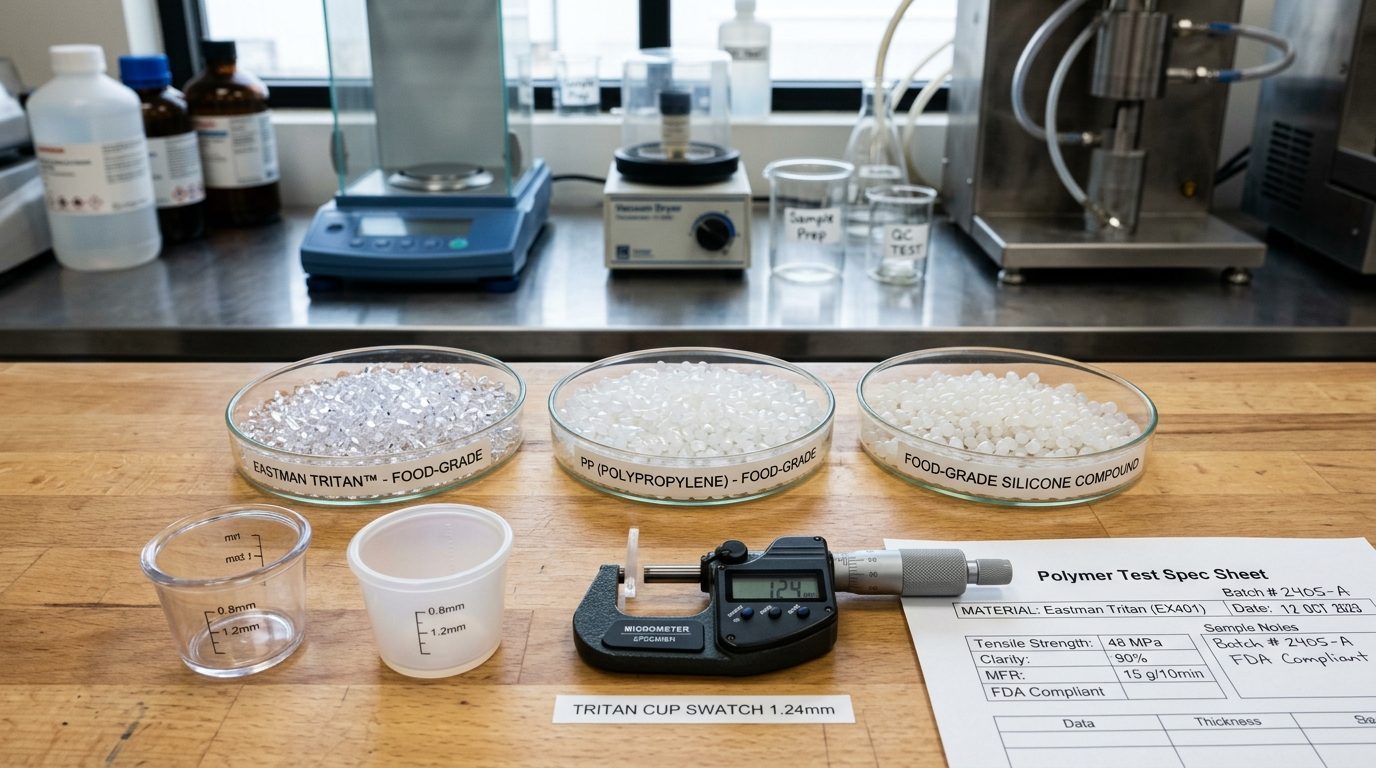
Figure 1.0: Optical clarity, density, and precision tolerance verification across food-grade polymer test samples at Naike Gifts Jinjiang Testing Lab.
When engineering custom reusable drinkware, polymer selection dictates your piece price, compliance clearance, and consumer return rates:
- Eastman Tritan™ (Copolyester): Best for high-end retail, outdoor hospitality, and infant bottles. Crystal-clear like glass, 100% BPA/BPS-free, shatterproof under 1.5M drops, heat-resistant from -20°C to 100°C. Raw material cost index: 2.6x–3.2x vs PP.
- Polypropylene (PP #5): The global standard for food containers, protein shakers, and microwave/dishwasher-safe lids. Semi-translucent, heat-resistant up to 120°C, chemical resistant, and highly economical.
- Acrylonitrile Styrene (AS / SAN): Best for double-wall tumblers, iced tea vessels, and glitter cups. High structural rigidity and scratch resistance, but limited to cold beverages (max 70°C–80°C).
- Polystyrene (PS #6) & RPET: Cost-effective for rigid disposable or single-season promotional barware and eco-recycled event drinkware.
📌 Compliance Reference: According to U.S. FDA 21 CFR 177 and European Commission Regulation (EU) No 10/2011, food contact polymers must undergo specific migration testing (OML < 10 mg/dm²) to ensure zero hazardous compound leaching.
In international drinkware manufacturing, choosing the incorrect resin causes over 70% of downstream quality disputes: cloudy dishwasher degradation, lid thread warpage under hot liquids, or unexpected brittle fracture during ocean transit. Below is our factory's quantitative comparison matrix based on 15+ years of injection molding experience.
Polymer Comparison Matrix for Drinkware & Food Containers
This technical data sheet compares the five most common food-safe polymers processed across our 40+ servo injection molding machines:
| Polymer Resin | Clarity & Appearance | Temp Tolerance | Drop Impact Durability | Dishwasher Safe? | BPA/BPS Free? | Cost Index | Primary Use Cases |
|---|---|---|---|---|---|---|---|
| Eastman Tritan™ (TX1001/2001) | 90%+ Crystal Glass Clarity | -20°C to 100°C | Exceptional (Shatterproof 1.5M) | Yes (100+ Commercial Cycles) | 100% Certified Free | $$$$ (2.8x) | Premium retail tumblers, sports bottles, resort pool barware |
| Polypropylene (PP #5) | Translucent / Milky Matte | -20°C to 120°C | High (Flexible, Crack-Resistant) | Yes (Top-Rack & Microwave) | 100% Virgin BPA-Free | $ (1.0x Base) | Lunch boxes, shaker cups, modular lids, snack jars |
| Acrylonitrile Styrene (AS/SAN) | 88% Crystal Transparency | -10°C to 75°C | Moderate (Rigid, Brittle on hard drop) | Hand-Wash Recommended | Yes (Food-Grade Formulated) | $$ (1.4x) | Double-wall cold tumblers, iced coffee cups, venue drinkware |
| Polystyrene (PS #6) | High Gloss Clarity | -10°C to 65°C | Low (Brittle under sudden stress) | No (Hand Wash Only) | Yes (Food-Contact Compliant) | $ (0.9x) | Promotional party cups, dessert cups, tasting goblets |
| Recycled PET (RPET / PCR) | Slight Tint to High Clarity | -20°C to 60°C | High Toughness | No (Cold Liquids Only) | Yes (GRS / FDA LNO Certified) | $$$ (1.6x) | Eco-conscious corporate gifts, festival cups, cold beverage bottles |
Deep-Dive: When to Specify Each Material
1. Eastman Tritan™: When Brand Value & Safety Are Non-Negotiable
Eastman Tritan copolyester has revolutionized the reusable drinkware category. Unlike conventional polycarbonate (PC), Tritan is engineered without bisphenol A (BPA), bisphenol S (BPS), or any other estrogenic or androgenic active compounds.
Factory Processing Notes: Tritan requires rigorous pre-drying (dessicant dehumidification at 88°C for 4 hours) prior to injection molding to avoid hydrolytic degradation and silvery splay marks. Because its melt viscosity is higher than PP, our engineers use high-pressure servo injection machines (250T–400T) with mirror-polished S136 cavity steel to ensure zero internal stress and bubble-free wall thickness.
2. Food-Grade Polypropylene (PP): The Utility Workhorse
PP represents nearly 50% of global food-contact containers. Its low density (0.90–0.91 g/cm³) makes it the lightest commercial plastic, reducing ocean freight weight costs. PP offers unmatched flexural fatigue resistance—making it the essential material for snap-lock hinge lids, flexible silicone seals, and airtight bento food containers.
3. AS (SAN): The Standard for Rigid Double-Wall Cold Tumblers
AS provides glass-like clarity with a surface hardness that resists fine hairline scratching. For double-wall insulated cups with printed inserts or decorative floating glitter, AS is ultrasonic-welding friendly, forming an airtight hermetic seal between inner and outer chambers. It is strictly recommended for cold and iced beverages, as boiling liquids can cause micro-crazing over time.
Common Misconceptions About Drinkware Polymers
❌ Myth 1: "All Clear Plastics Leach Harmful Bisphenols (BPA/BPS)"
✔ Engineering Reality: Only polycarbonate (PC) synthesizes using Bisphenol A. Modern materials such as Eastman Tritan™ and Acrylonitrile Styrene (AS) are synthesized from completely different monomers (such as dimethyl terephthalate and tetramethyl cyclobutanediol). Third-party GC-MS lab testing consistently confirms 0.00% bisphenol detection down to 0.1 ppb thresholds.
❌ Myth 2: "If It's Dishwasher Safe, It Can Withstand Any Microwave Heating"
✔ Engineering Reality: Dishwasher durability evaluates resistance to alkaline detergent wash cycles (up to 70°C). Microwave heating, especially with foods containing oily fats or concentrated sugars, can easily spike localized temperatures past 140°C. While Polypropylene (PP) can handle microwave reheating, Tritan and AS should not be microwaved.
❌ Myth 3: "Eco-Friendly Recycled Plastic (rPET) Has the Same Heat Resistance as Virgin Resin"
✔ Engineering Reality: Mechanically recycled plastics experience slight polymer chain shortening during thermal re-granulation. rPET drinkware has a heat deflection threshold around 60°C. It is optimal for chilled beverages, iced lattes, and event giveaways, but unsuitable for boiling water.
Secondary Processing & Surface Decoration Feasibility Across Resins
Selecting the right polymer is only half the engineering equation. For retail brands, corporate merchandising directors, and licensed character products, surface print adhesion and structural bonding compatibility dictate whether the finished product can survive consumer dishwashing cycles and daily abrasive wear.
| Decoration & Assembly Process | Eastman Tritan™ | Food-Grade PP | AS (SAN) | Recycled rPET / PCR |
|---|---|---|---|---|
| Silk-Screen Printing | Excellent. High surface energy enables 1-3 color direct printing with epoxy/polyurethane inks. Cross-hatch adhesion rating: 5B (ASTM D3359). | Requires flame treatment or corona discharge surface pre-treatment (≥42 dyn/cm) to prevent ink flaking during wash tests. | Superior native ink adhesion without flame treatment. Ideal for high-precision typographic logos and Pantone spot lines. | Good adhesion. Requires temperature-controlled curing below 60°C to prevent thin-wall container warping. |
| UV Digital Full-Color 360° Wrap | Industrial inkjet primer keying yields 1440dpi photo-realistic graphics. Highly resistant to finger oils and UV discoloration. | Requires specialized adhesion promoters. Recommended only for seasonal promo cups, not daily-use premium merchandise. | Flawless ink transfer. High substrate stiffness prevents graphic shearing or micro-cracking under physical deflection. | Applicable with flexible UV LED curable inks. Provides excellent opacity across slightly tinted PCR resin bases. |
| Heat Transfer Film (HTF) | Suitable with 165°C silicone roller transfer. High heat distortion temp (99°C) prevents dimensional distortion during stamping. | Industry standard. Thermal fusion between PP carrier film and PP cup wall forms a permanent molecular bond. | Requires precise dwell time control. Thermal exposure over 1.5 seconds at 180°C can induce localized stress crazing. | Moderate suitability. Requires low-temperature heat-activated adhesive backings (120°C–135°C). |
| Ultrasonic Welding (Double-Wall) | Exceptional hermetic bonding. High acoustic transmission efficiency creates crystal-clear, leak-proof joints without adhesive. | Poor ultrasonic resonance due to high internal viscoelastic damping. Typically assembled via snap-fit with silicone gaskets. | Benchmark resin for double-wall insulated tumblers. Rapid energy director collapse creates 100% moisture-sealed vacuum gap. | Limited weldability; molecular weight variation in recycled flakes can cause uneven weld line burst strength. |
Thermal Aging & Hydrolytic Stability Analysis (200-Cycle Dishwasher Testing)
One of the most frequent drivers of consumer returns and retail warranty claims in North America and Western Europe is aesthetic degradation after automatic dishwasher exposure. Modern household dishwashers combine caustic alkaline detergents (pH 10.5–11.5), wash water temperatures up to 70°C (158°F), and heated air drying cycles reaching 80°C.
Accelerated Laboratory Aging Protocol & Physical Findings
At Naike Gifts In-House Quality Lab, production validation samples undergo accelerated 200-cycle commercial dishwasher simulation using a calibrated Miele Professional lab washer. The physical findings demonstrate critical structural divergences:
- Eastman Tritan™ TX1001 / EX401: Zero optical haze accumulation (<0.8% ASTM D1003 haze meter reading after 200 cycles). Zero micro-cracking at gate injection points or thread roots. Retained >92% of original notched Izod impact strength.
- AS (Acrylonitrile Styrene / SAN): Exhibits localized environmental stress cracking (ESC) after 25–40 cycles when exposed to rinse-aid surfactants and citrus-based wash detergents. Optical clarity drops by 18–25% due to surface micro-scratches. Requires clear "Hand-Wash Recommended" labeling on packaging.
- Polypropylene (Borealis / Sinopec Food Grade): 100% immune to environmental stress cracking and alkaline detergent hydrolysis. Shows minor surface gloss reduction (ΔGloss < 5 GU) after 200 cycles, with zero dimensional shrinkage across lid closure screw threads.
Engineering Case Study: Resolving Ultrasonic Weld Leaks on 24oz Double-Wall Tumblers
Project Background: A leading Scandinavian promotional gift distributor ordered 80,000 units of custom 24oz double-wall acrylic/SAN tumblers with custom glitter flakes suspended in the insulation chamber. During the initial pilot run at an external sub-tier factory, the client experienced a 14.2% water leakage rate during consumer dishwasher cycles.
Root Cause Engineering Audit: Upon transferring the production tooling to Naike Gifts, our injection tooling engineers identified two fundamental flaws: (1) An uneven energy director angle (60° instead of the optimal 90° modified chisel tip) on the outer cup rim, causing incomplete resin melt flow; and (2) Moisture absorption in the SAN raw material granules prior to injection, creating micro-bubbles along the sonic weld seam.
Technical Corrective Actions Implemented:
- Tooling Horn Re-Machining: Re-machined the ultrasonic horn fixture to apply 1,800N uniform pneumatic clamping force with a 20kHz Branson ultrasonic welder, optimizing the energy director tongue-and-groove joint profile.
- Dehumidifying Hopper Drying: Instituted mandatory 4-hour desiccant hopper drying at 80°C (dew point -40°C) for all SAN pellets before hopper feeding, driving raw resin moisture below 0.02%.
- 100% Inline Vacuum Seal Testing: Implemented a negative-pressure underwater bubble test chamber (-0.06 MPa, 15-second immersion) for every welded cup prior to packaging.
Final Production Outcome: Defect leakage rate was slashed from 14.2% to 0.04% (32 units across 80,000 pcs), passing full LFGB sensory and European EN 12546-1 thermal insulation compliance tests on the first submission.
B2B Buyer Sourcing Checklist: Choosing the Ideal Resin
- Beverage Temperature: Will consumers pour boiling tea or coffee (>85°C)? If yes, eliminate AS and PS; specify Tritan or food-grade PP.
- Cleaning Method: Is commercial dishwasher resistance (>65°C alkali wash) a declared marketing claim? Choose Tritan or PP.
- Target Retail Price Point: For promotional giveaways under $3.00 FOB, choose PP or AS. For retail collections retailing $15–$30+, Tritan is mandatory.
- Custom Color Tinting: Tritan and AS accept Pantone PMS transparent color tints beautifully; PP results in attractive pastel or solid opaque tones.
- Certification Traceability: Verify batch-level Certificates of Analysis (CoA) from raw resin manufacturers and accredited lab reports (SGS/TÜV) for destination markets.
Need Physical Resin Swatches or Sample Testing?
Our Jinjiang engineering facility provides free material sample packs and DFM feasibility evaluations within 24 hours.
Frequently Asked Questions on Drinkware Plastics
Can Tritan drinkware be printed with multi-color brand logos?
Yes. Tritan accepts silkscreen, 360° rotary UV digital printing, and heat-transfer decals. At Naike Gifts, we apply plasma surface treatment to ensure cross-hatch adhesion passing 100-cycle dishwasher abrasion tests.
What test certificates do you provide for European and US customs?
We supply full third-party test reports from SGS, Intertek, and TÜV verifying FDA 21 CFR 177 standards for the US, and German LFGB / EU (EC) No 1935/2004 compliance for Europe.
What is the minimum order quantity (MOQ) for custom-colored Tritan or PP cups?
Our factory MOQ starts at 500 units for custom private labeling on existing tooling molds, and 1,000–3,000 units for proprietary custom Pantone resin color compounding.
What certifications must plastic drinkware pass for export to the US and EU?
Products must comply with US FDA 21 CFR 177 standards (e.g. 177.1240 for copolyesters and 177.1520 for polypropylenes) and European Regulation (EU) No 10/2011 alongside German LFGB §30/31 overall and specific chemical migration limits.